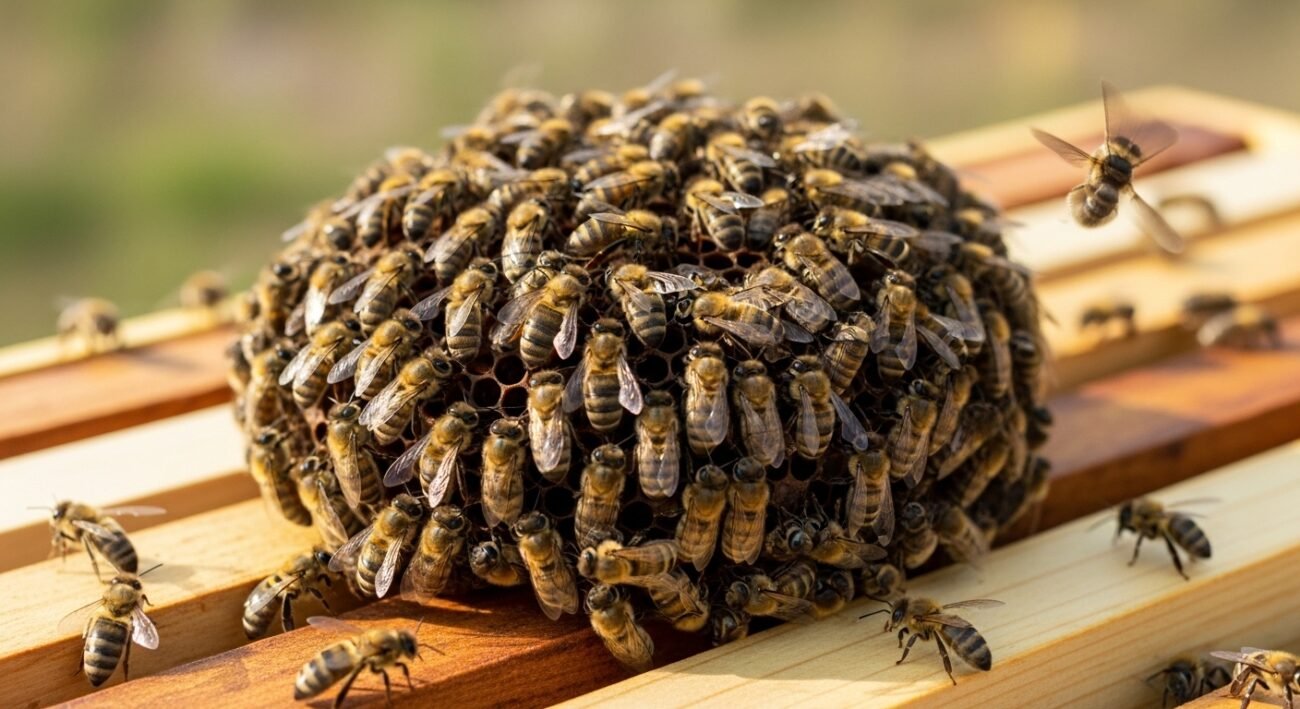
Winter presents numerous obstacles for most insect species, but honey bees have developed exceptional methods which enable them to endure extreme cold conditions. The social insects maintain their colony existence through their collective work and their consumption of stored food and their precise social activities. Here are ten fascinating ways bees manage to endure the cold months.
Forming a Tight Winter Cluster
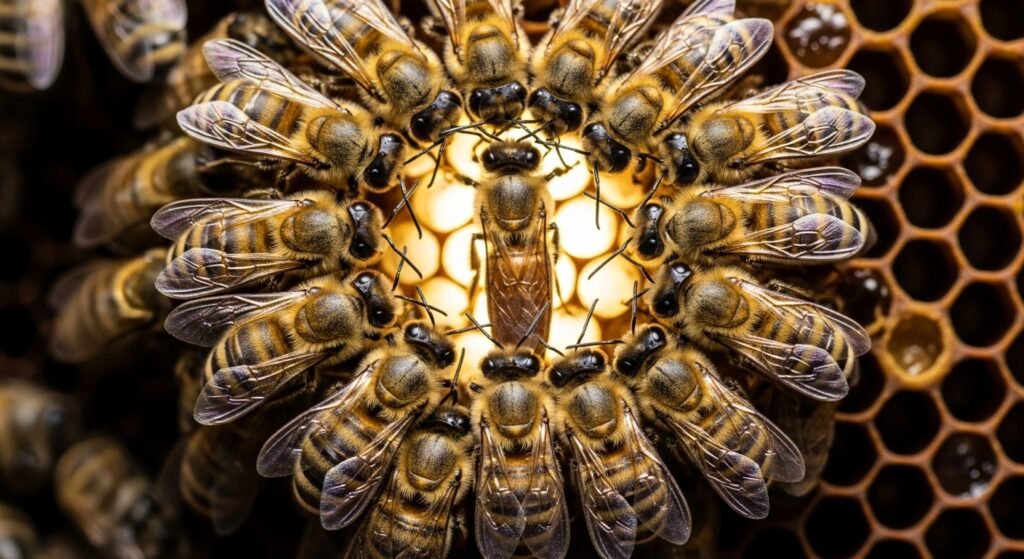
Worker bees complete hive lockdown procedures by gathering around their queen to form a compact cluster system which they maintain until temperature decreases. This formation helps conserve warmth and protects the queen at the center.
Generating Heat Through Muscle Movement
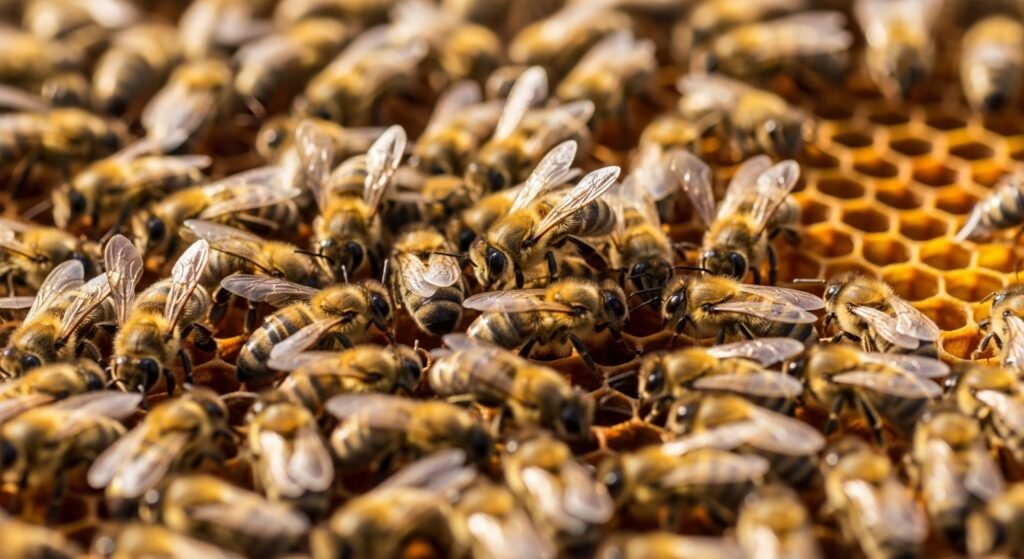
Bees can produce heat by vibrating their flight muscles without flying. This motion produces heat which maintains a temperature that supports life within the cluster.
Rotating Positions Inside the Cluster
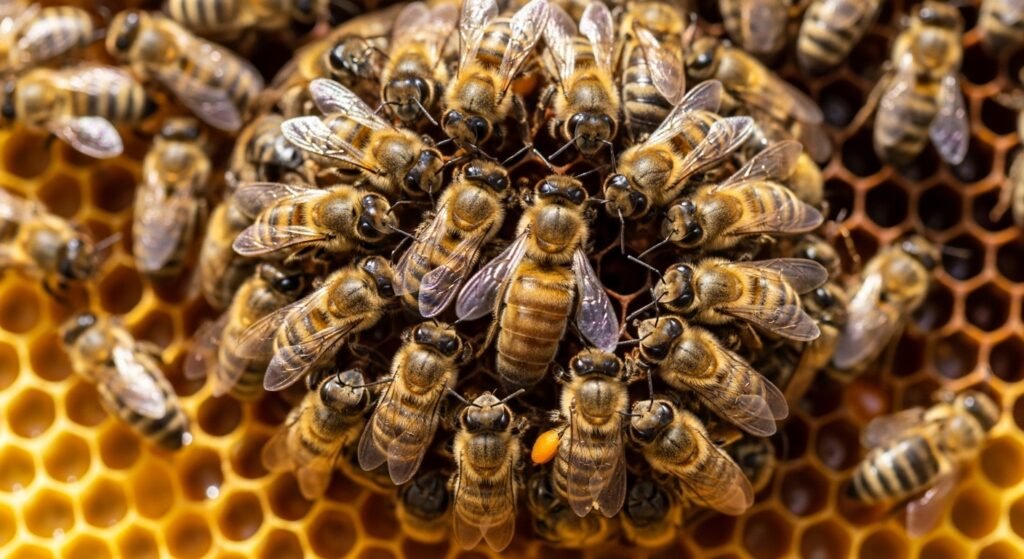
Bees continuously change their location within the group. The outer layer of the group contains individuals who need to move into the inner section while the warmer members of the group need to exit toward the outer section.
Feeding on Stored Honey
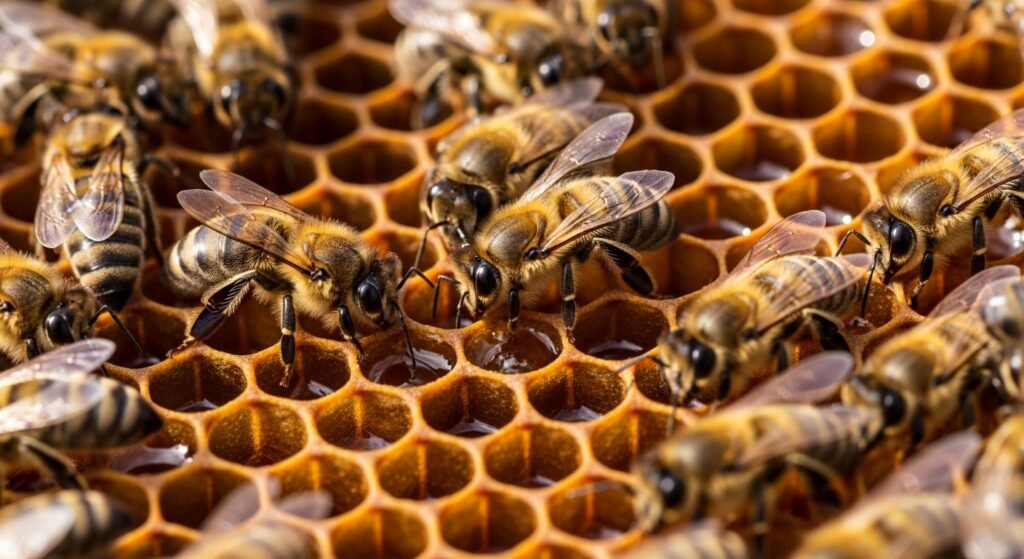
The bees gather large honey reserves during the active months. The colony relies on this honey during wintertime because it serves as their primary food source and their energy source for creating warmth.
Protecting the Queen
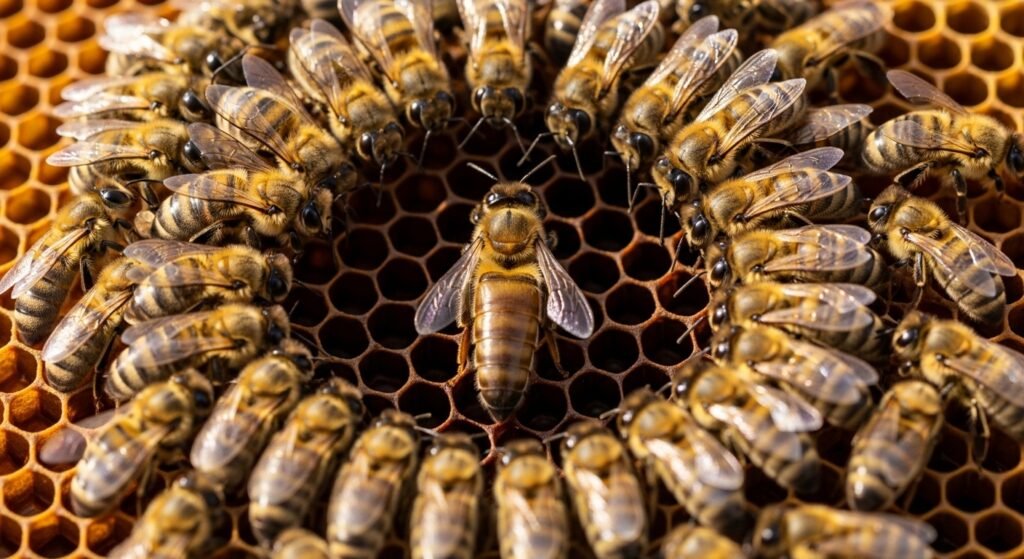
The queen remains at the center of the cluster where temperatures stay most stable. Worker bees surround her, ensuring she remains protected during the coldest periods.
Reducing Activity Levels
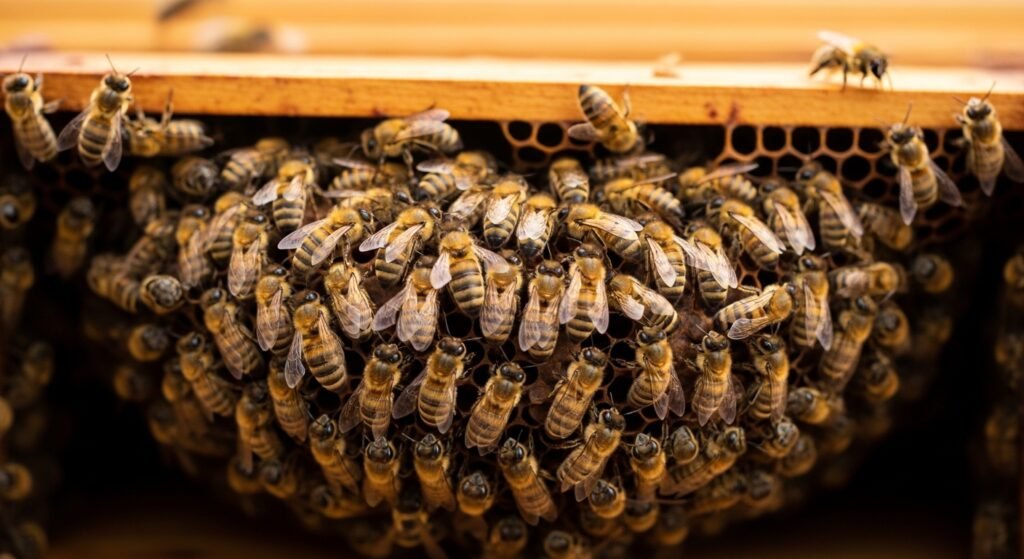
Bees maintain essential activity which provides enough heat, yet their movements decrease during wintertime. The bees use reduced activity levels to protect their energy resources and their food supplies.
Sealing the Hive Interior
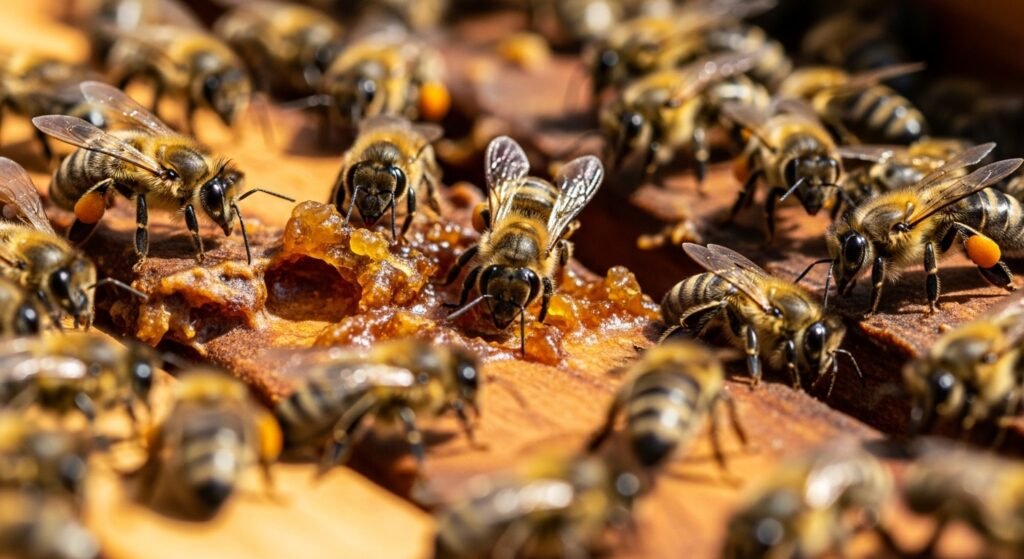
Bees use a resin-like substance called propolis to seal cracks and gaps in the hive. This procedure creates a protective barrier which prevents air movement while preserving consistent internal environmental conditions.
Maintaining Hive Temperature
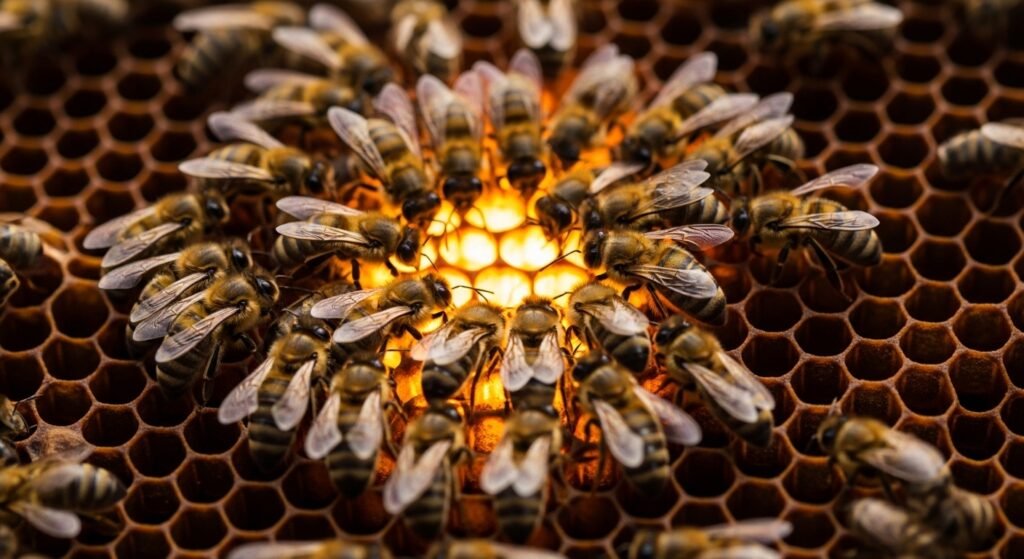
During extreme winter weather conditions, honey bees work together to create a constant temperature throughout their hive. The bees in this cluster produce heat by using their flight muscles to vibrate at high speeds without taking to the air.
Cleaning the Hive on Warmer Days
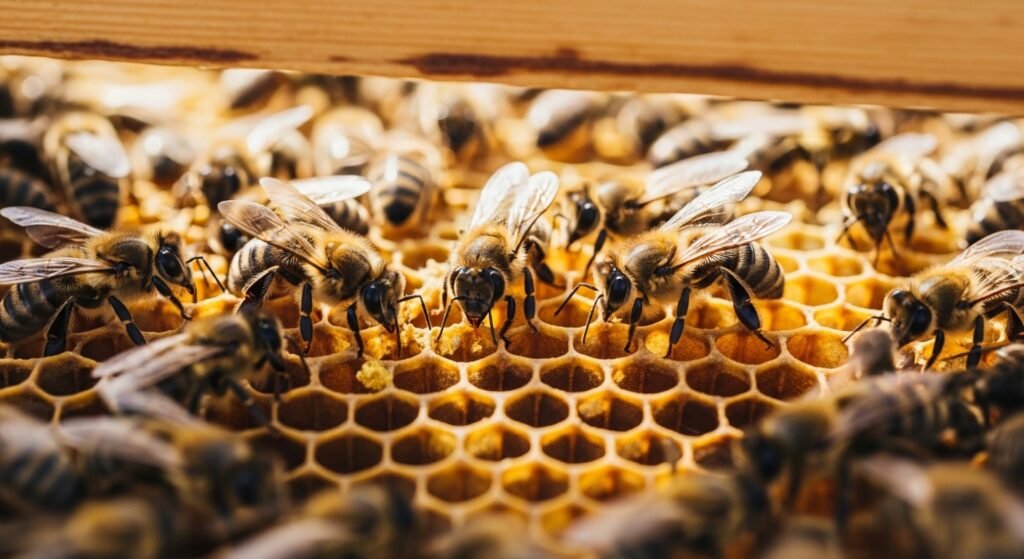
Honey bees stay inside their hive during extended winter seasons because cold weather makes it hazardous for them to fly outside. The bees maintain their living area clean because they possess an innate cleanliness behavior which they actively practice.
Preparing Months in Advance

The colony needs to start its winter survival activities before cold weather arrives. Bees use late summer and autumn to collect nectar and pollen which they will need to create their winter food supplies.
