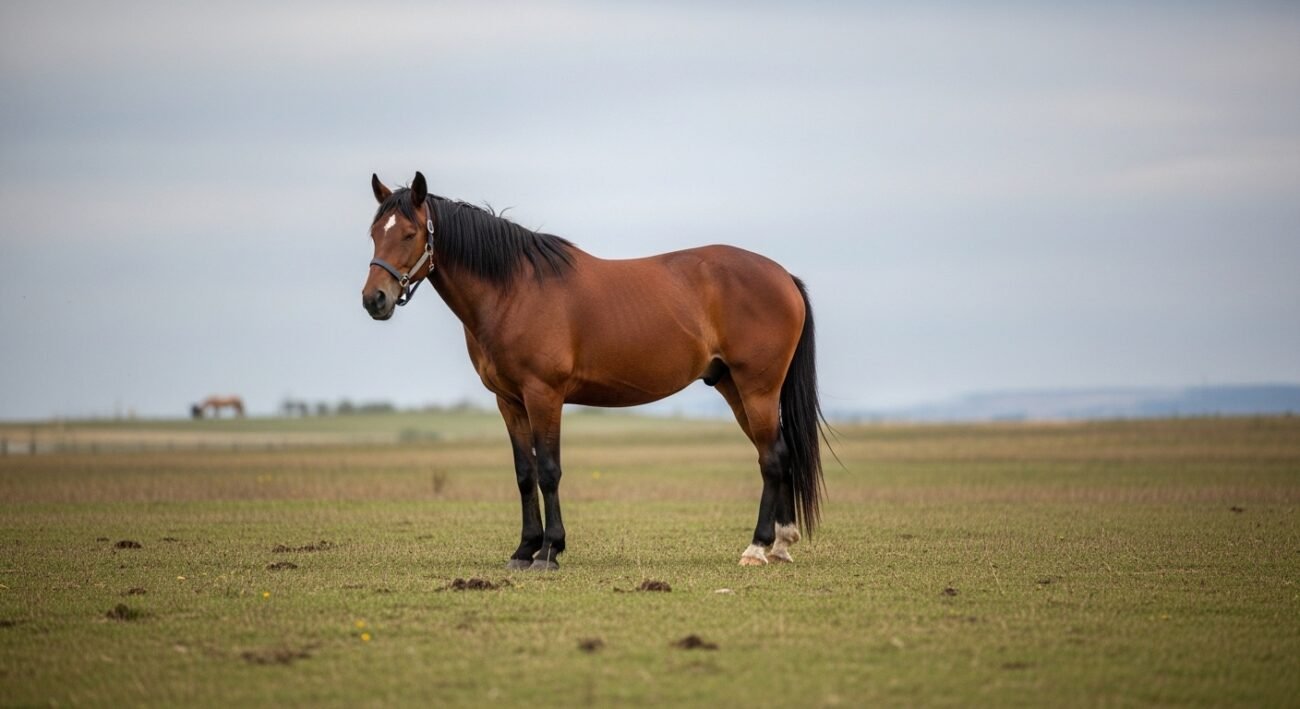
The first time you see it the situation appears to be impossible: a giant creature sleeps while standing up. Horses truly can sleep standing up yet there’s more to the story than most people realize. Their sleep patterns developed to help them survive on open grassland. Here’s the real secret behind how and why horses rest the way they do.
Survival Adaptation
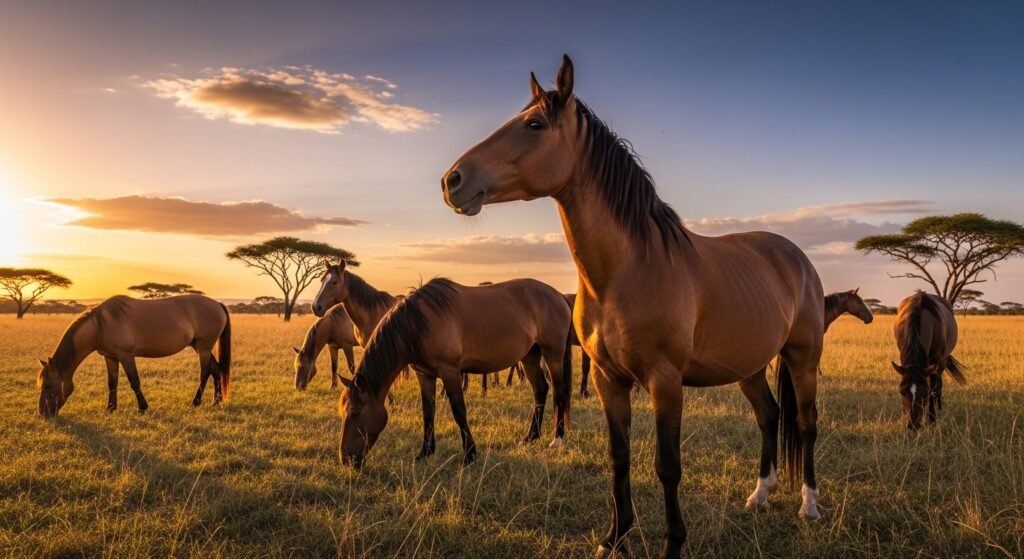
Horses developed evolutionarily as prey animals to maintain constant readiness for swift escape. Standing rest enables horses to react quickly when their surroundings shift.
Don’t Fully Sleep Standing
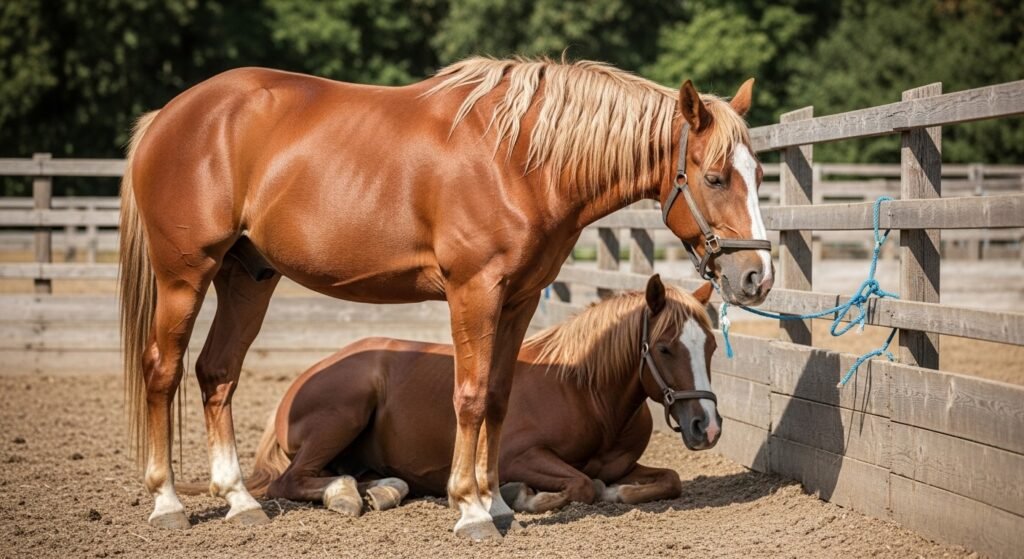
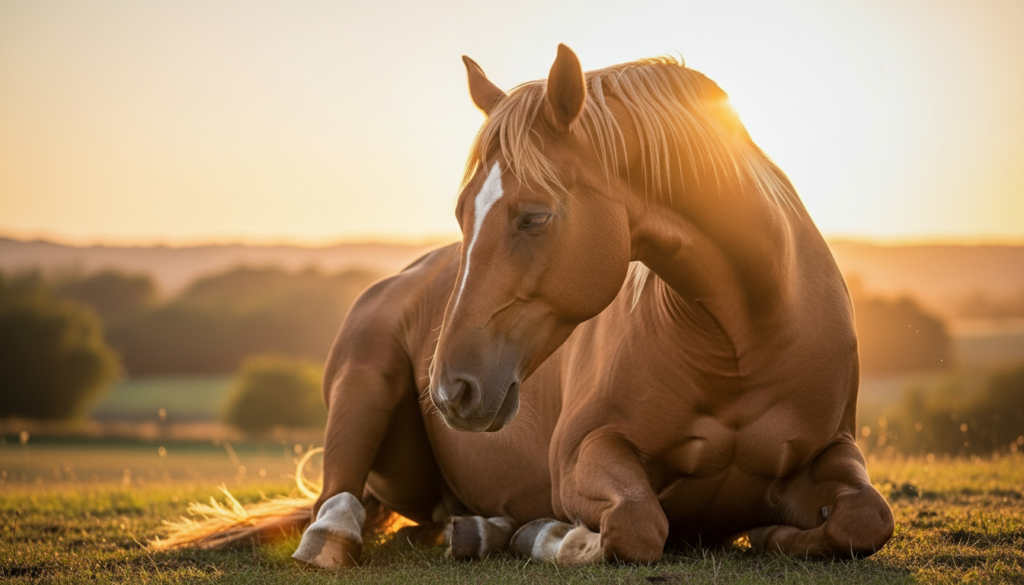
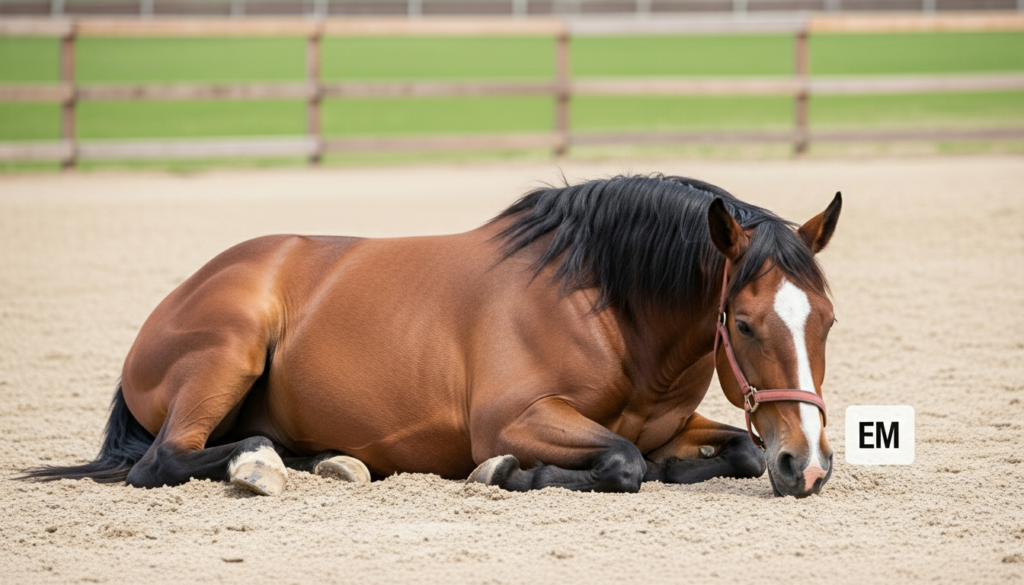
Horses possess the capability to sleep while standing but they must lie down to enter deep REM sleep. The body requires short periods of time on the ground for complete restorative sleep.
Light Sleep Happens Often
A horse spends most of its rest time in short light sleep cycles. During this stage they appear to be relaxed but they continue to monitor their environment.
Shift Weight to Stay Comfortable
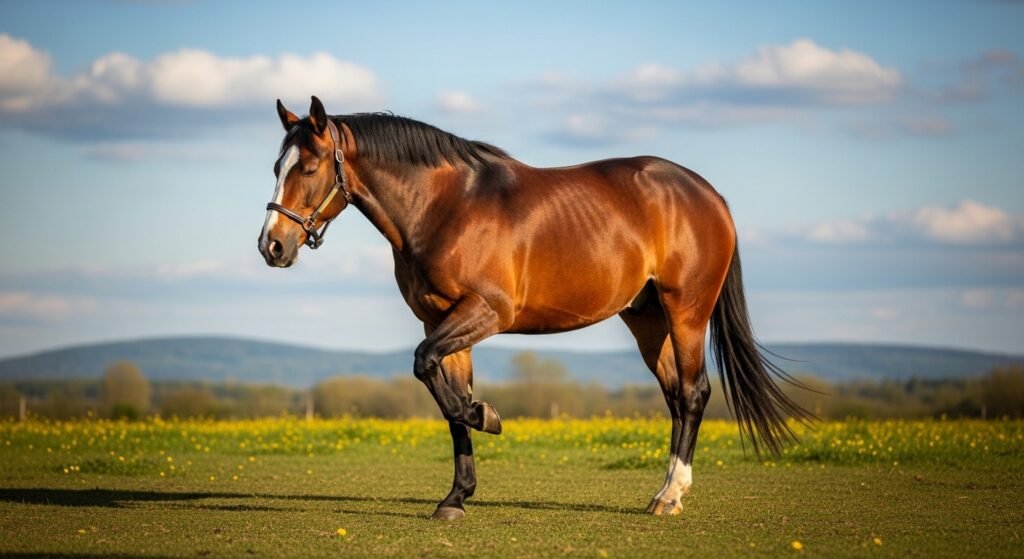
Horses stand at rest by relaxing one of their hind legs and transferring their body weight. The horse uses this position to reduce pressure on its stay apparatus system.
Herd Dynamics Influence Sleep
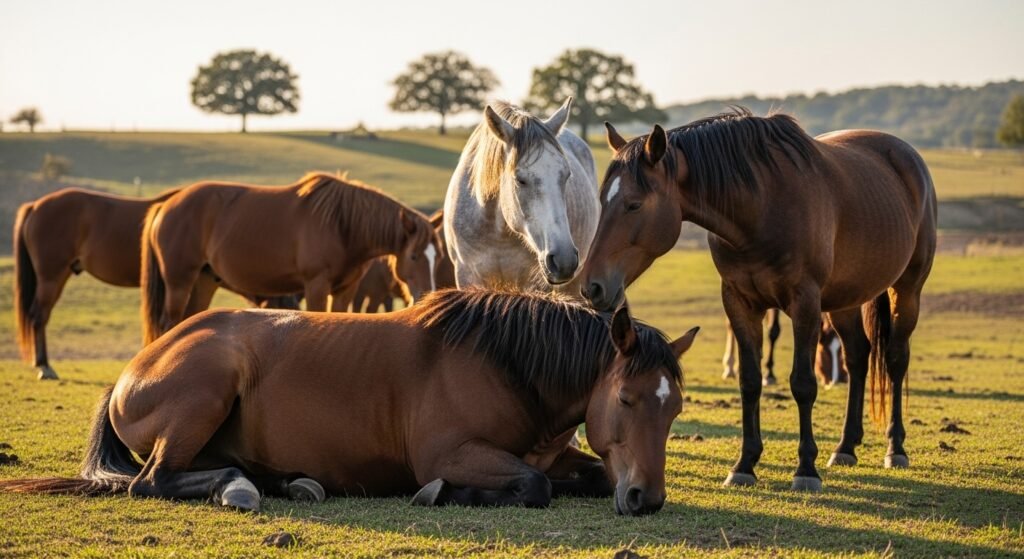
In group settings some horses will take rest periods while their companions keep watch. The group establishes their shared understanding to enhance their overall protection.
Young Foals Sleep Differently
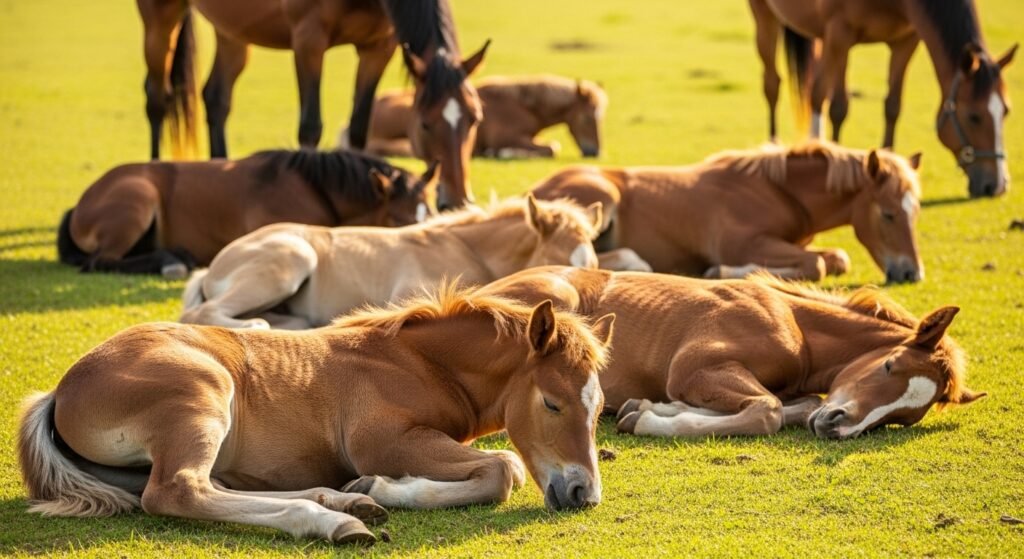
Foals spend more time lying down compared to adult horses. The foals develop into adults who spend more time resting while standing.
Environment Affects Resting Behavior
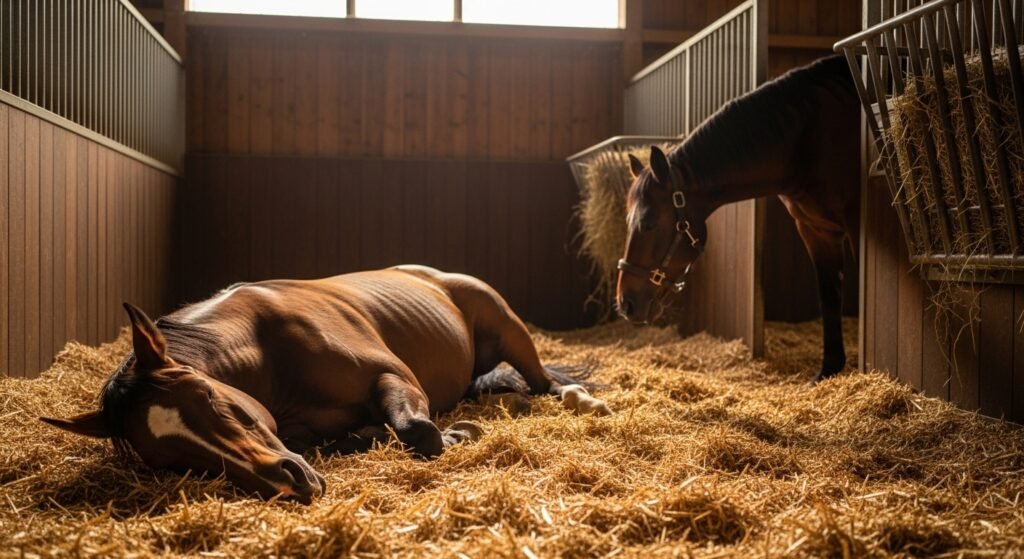
Horses at secure and quiet places tend to lie down more often which results in deeper sleep during their sleep cycles. Factors like stabling, lighting, social structure, and climate, significantly impact a horse’s ability to rest.
Health Impacts Sleep Patterns
Horses require 5 hours of sleep daily, including crucial, short periods of REM sleep. Horses experiencing pain will not lie down to rest. Observing changes in resting habits can provide insight into well-being.
